SCUA continued to present excellent programming this quarter with the following presentations:
Dr. Chuck Bolton Discussed His New Book Home Front Battles: World War II Mobilization and Race in the Deep South
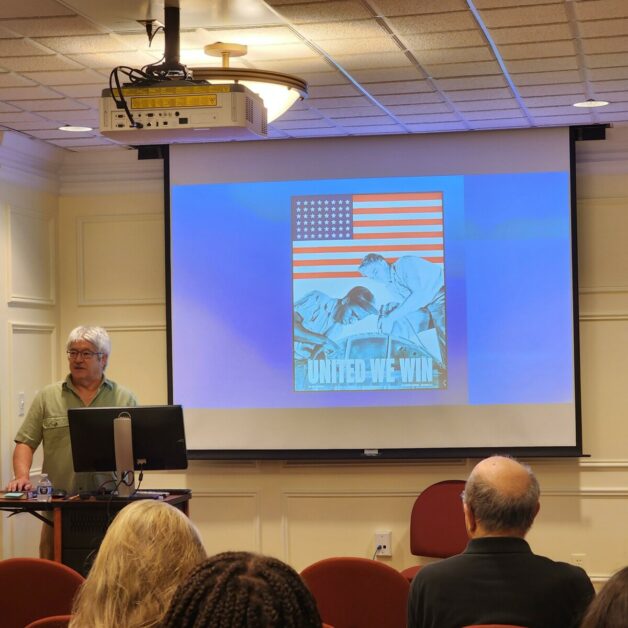
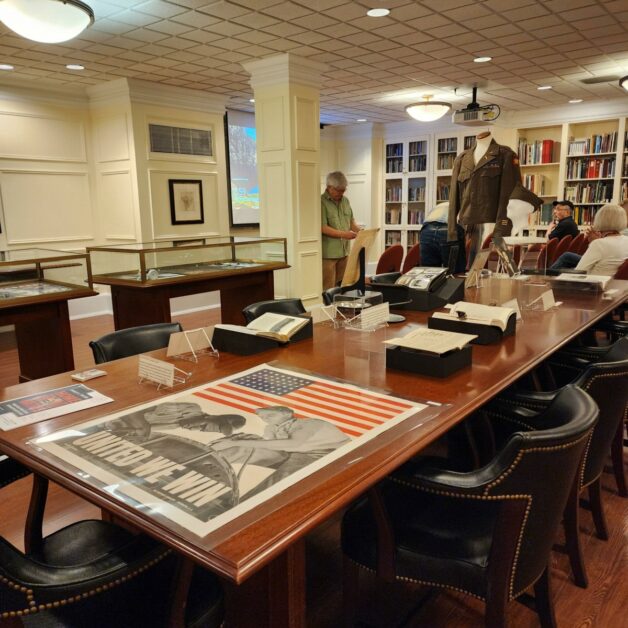
On Wednesday, September 18th, in Hodges Reading Room, Dr. Charles C. Bolton spoke about his recently published book Home Front Battles: World War II Mobilization and Race in the Deep South (Oxford University Press). Bolton’s book explores the role of race in World War II mobilization in the Deep South, where the needs of wartime industries and bases inflamed tensions around labor, land, and military service.
To accompany Dr. Bolton’s presentation, SCUA graduate assistant Grace Zayobi curated an exhibit of related materials. The exhibit featured posters, printed materials, and other documents related to World War II, race, and military service.
Charles C. Bolton is a professor of History and the current Faculty Senate Chair at UNCG. His research focuses on twentieth-century United States, the American South, oral history, race, and politics. He is the author of many books on Southern history, including Poor Whites of the Antebellum South, The Hardest Deal of All: The Battle Over School Integration in Mississippi, 1870-1980, and William F. Winter and the New Mississippi.
Dr. Alice Haddy Lectured About Florence Schaeffer and the Study of Science at the Woman’s College
On October 24, SCUA hosted Dr. Alice Haddy, professor in UNCG’s Department of Chemistry and Biochemistry, for a talk about her research on former faculty member Florence Schaeffer. Schaeffer was hired as an instructor in the Chemistry Department at the North Carolina College for Women (now UNCG) in 1922. She went on to become head of the Chemistry Department in 1934, leading the department for the next thirty years. Haddy’s talk explored Schaeffer’s life, education, and work, as well as the impact she had on educating women in chemistry.
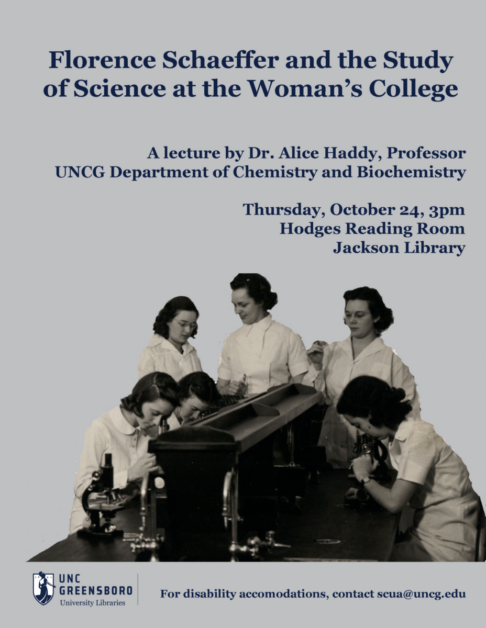
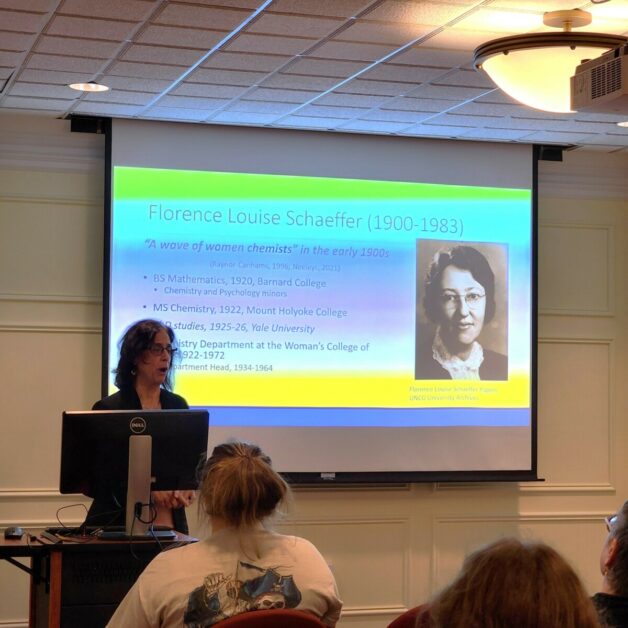
To accompany Dr. Haddy’s talk, an exhibit was created by SCUA graduate assistant Grace Zayobi. The exhibit included materials related to Schaeffer, as well as other women faculty and students in the sciences at the school now known as UNC Greensboro.