Rare Books
Fritzi Brod’s Aesthetic Masterpiece, Flowers in Nature and Design
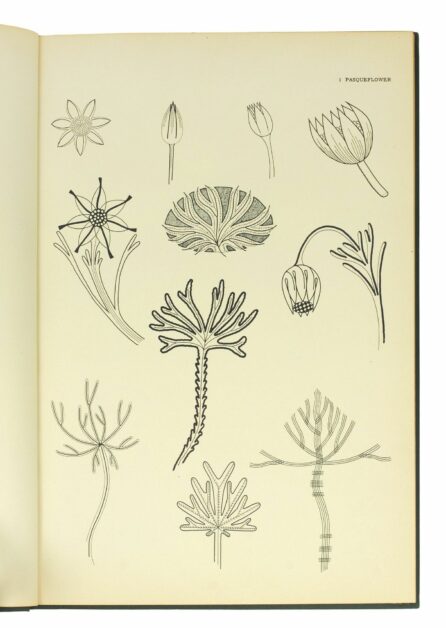
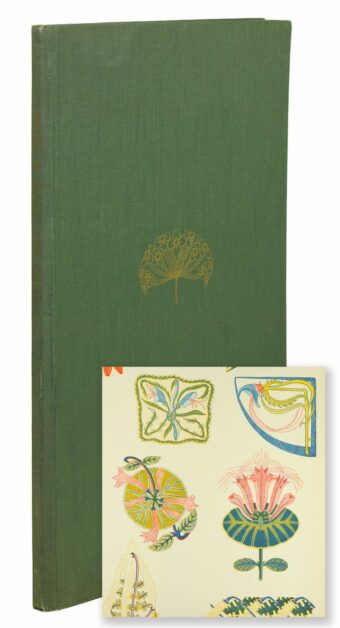
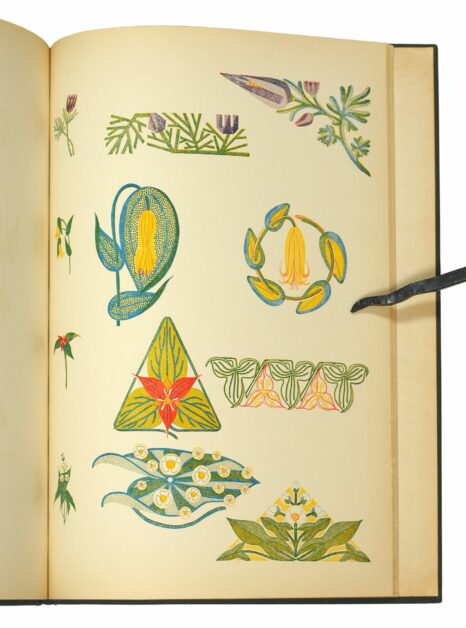
Fritzi Brod’s early inspiration came from witnessing Pavlova and her ballet as a child, which led her to pursue costume design and incorporate floral embroidery into her work. She studied at art schools in Prague and was accepted into the competitive Kunstgewerbeschule in Vienna. By the time she arrived in Chicago in 1924, she was an accomplished textile designer, with over 200 patterns published in the German magazine Schmuckformen. Her textile designs were among the first “modern” patterns displayed at Marshall Field’s (https://www.chicagomodern.org/artists/fritzi-brod). Brod’s innovative approach to textile design earned her significant recognition in the American fashion industry. She authored several books on design, including 200 Motifs and Design, Flowers in Nature and Design, and Decorative Design. Flowers in Nature and Design offers a valuable collection of ideas and patterns suitable for studios and shops that prioritize aesthetic excellence.
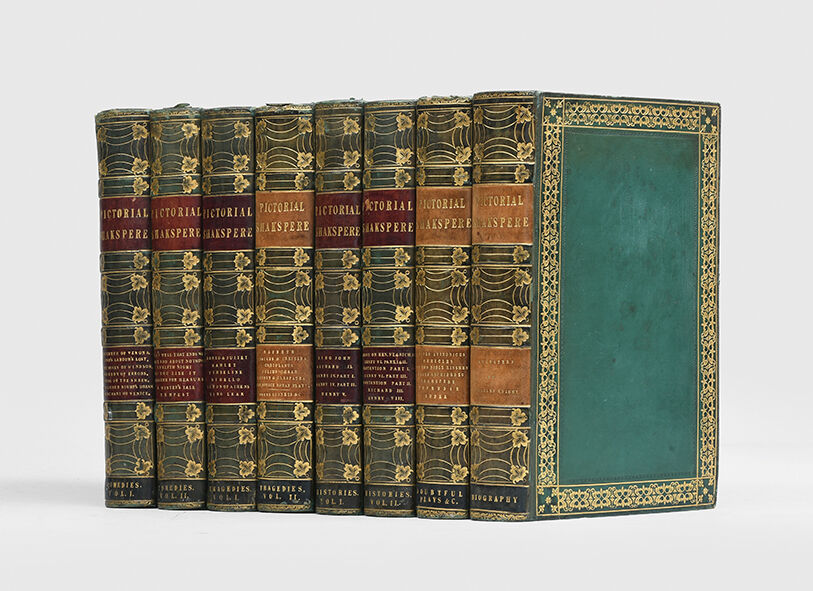
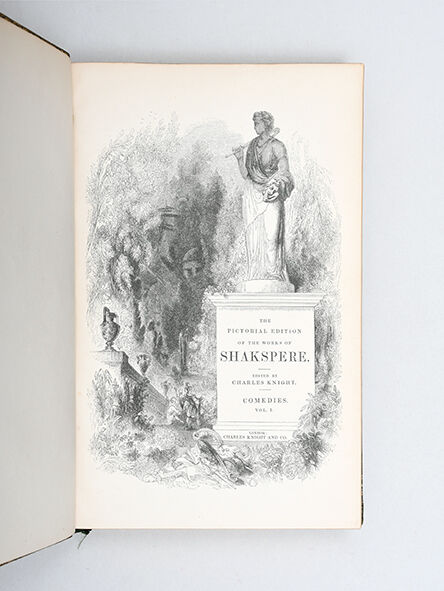
The Pictorial Edition of the Works of William Shakespeare edited by Charles Knight
Charles Knight (1791–1873) developed a strong interest in William Shakespeare and became a bibliophile during his teenage years. He owned an incomplete First Folio and supplemented his collection by printing missing pages from a facsimile edition. His first significant publication as an author occurred in 1837, when he produced a pictorial edition of Shakespeare’s works. Knight’s Illustrated Shakespeare is recognized for its textual accuracy, comprehensive biographical preface, and extensive collection of wood engravings.
This project fostered a deep interest in the playwright’s life, leading to the inclusion of an original biography within the edition. The set also contains a volume titled “Doubtful Plays,” which features works now attributed to Shakespeare, alongside excerpts from lesser-known plays often considered part of the Shakespearean apocrypha, such as “The Life and Death of Thomas Lord Cromwell” and “The Merry Devil of Edmonton.”
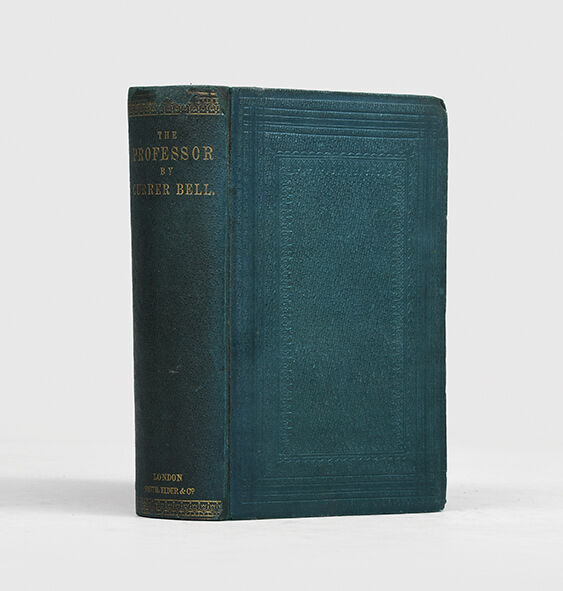
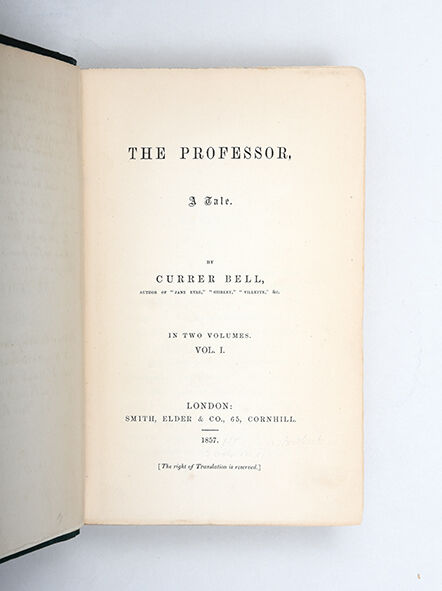
Charlotte Brontë’s First Novel, The Professor, Published Posthumously
The first edition of the first novel written by Charlotte Brontë was published posthumously under her pseudonym, Currer Bell. According to the publisher, Smith, it is one of 719 copies bound by or before June 30, 1859. The Professor was initially submitted to publishers alongside Wuthering Heights and Agnes Grey, both individually and collectively, but faced multiple rejections before ultimately being published. The novel was partially inspired by Brontë’s experience as a teacher in Brussels, an experience she also incorporated into her later work, Villette (1853).
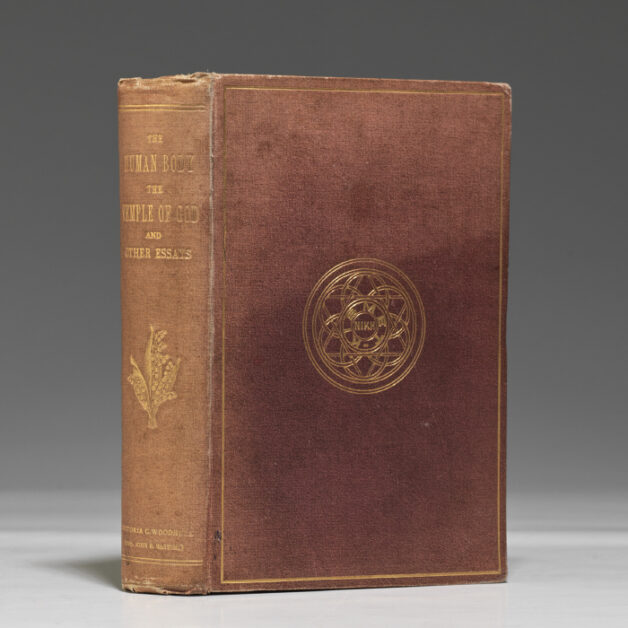
First Edition of Suffragette Victoria Woodhull’s The Human Body: The Temple of God, 1890
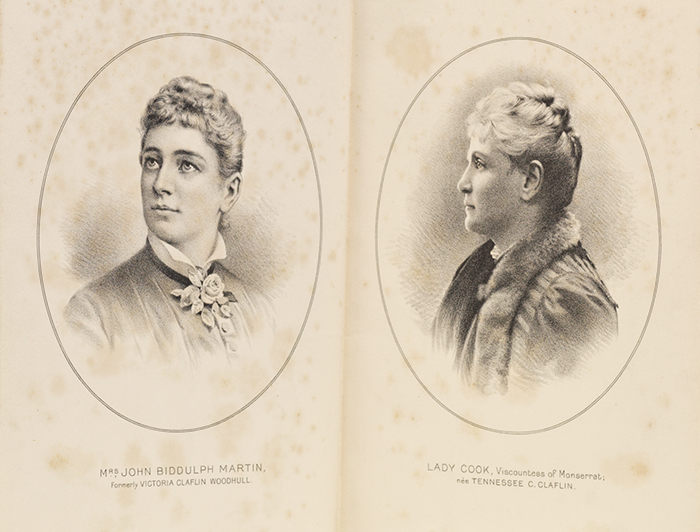
Victoria Woodhull and her sister, Tennessee Claflin, were two of the most notable figures of the 19th century. Advocates for women’s rights, women’s suffrage, free love, and labor reform, the sisters initially gained prominence as the first female stockbrokers on Wall Street. Although they were sometimes the subjects of mockery in the media, Woodhull and Claflin successfully generated significant financial gains for their clients— including Cornelius Vanderbilt— and amassed considerable wealth. They invested their earnings into founding a progressive weekly newspaper that advanced their social and political views. The publication also played an important role in promoting Woodhull’s campaign for the presidency of the United States.
“The Human Body: The Temple of God” was among Woodhull’s public lecture offerings. Originally delivered in the United States, Woodhull considered the speech applicable for British audiences and began delivering it throughout the United Kingdom upon her arrival in 1877. While the lecture’s title was considered provocative for the Victorian era, the content was largely non-scandalous. Nevertheless, her highly publicized speech was regarded as progressive, and attendees left the presentation satisfied. The media, in particular, recognized her as a skilled orator. This lecture, along with other essays concerning women’s rights and political issues, was published in the first edition of her collected works in 1890.
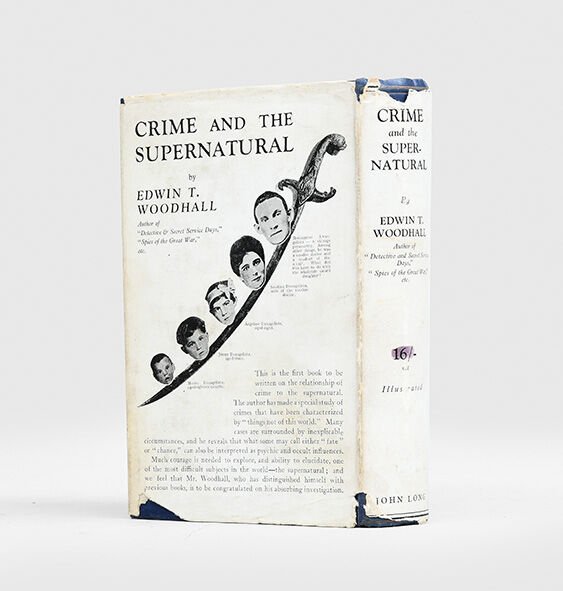
Edwin Woodhall’s Crime and The Supernatural
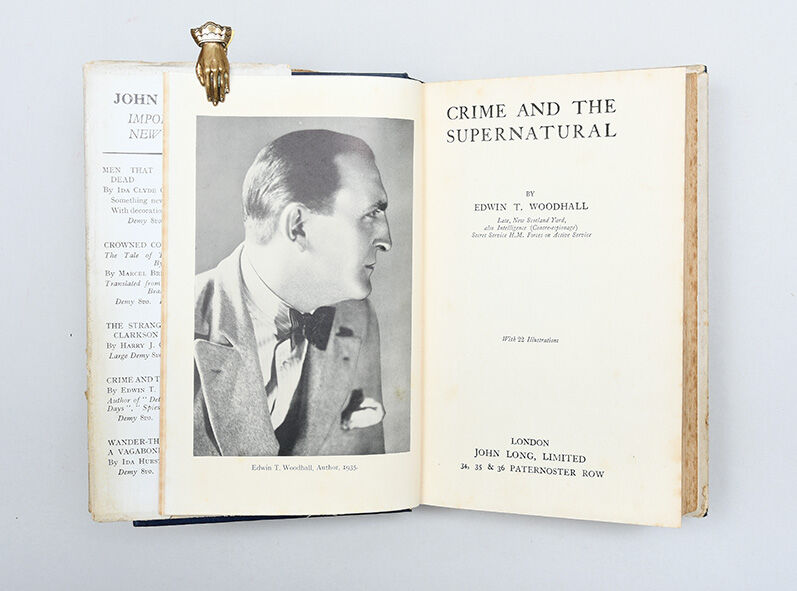
Edwin Woodhall (1886-1941) served in various specialized units within the Metropolitan Police, including the Special Political Branch and MI5. He provided protective surveillance for prominent political figures of his time. In addition to his law enforcement career, Woodhall authored more than 40 true crime novels and established a private detective agency.
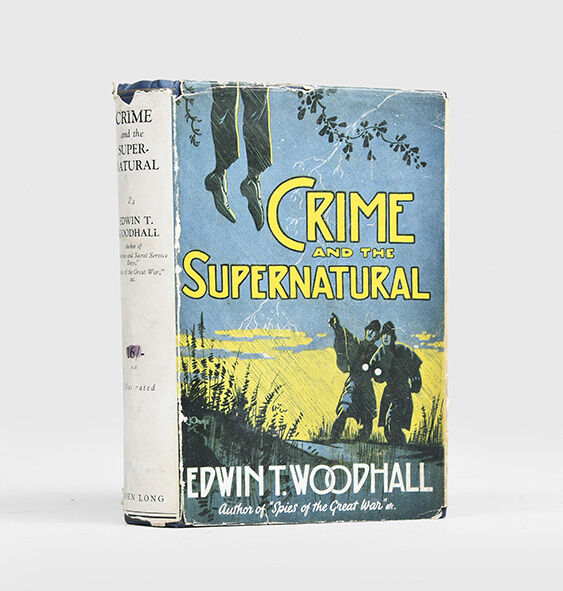
The first edition of Crime and the Supernatural, a copy with a scarce dust jacket, explores the potential applications of paranormal and psychic techniques in detective work. Woodhall was a former police officer and investigator of Jack the Ripper; this publication includes a chapter on clairvoyance in relation to the Ripper case.
Special Collections
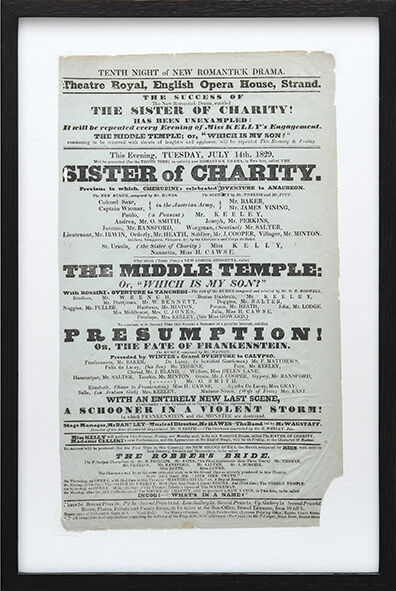
“Presumption! Or, the Fate of Frankenstein“
This playbill is from the performance held on July 14, 1829, at the Theatre Royal, English Opera House, featuring Richard Brinsley Peake’s stage adaptation of Mary Shelley’s Frankenstein. The play originally premiered six years earlier, on July 28, 1823, at the same theatre. The success of that inaugural performance in 1823 prompted Mary Shelley’s father, William Godwin, to publish the 1823 edition of Frankenstein, which credited Mary Shelley, as she had chosen to publish the first edition in 1818 anonymously.
Whitechapel Murders
During the second half of 1888, the East End of London, particularly the Whitechapel district, was affected by a series of crimes committed by an unidentified individual later referred to as Jack the Ripper. These widely publicized incidents received international media coverage, including extensive reports in American newspapers of that period.
Among the various publications, The Times of London was recognized as a leading source for such reports, given its prominence and reputation. The October 11, 1888 issue contains several reports on the case as well as letters to the editor, demonstrating how the murders gripped the imagination at the time.


Women Veterans Historical Project
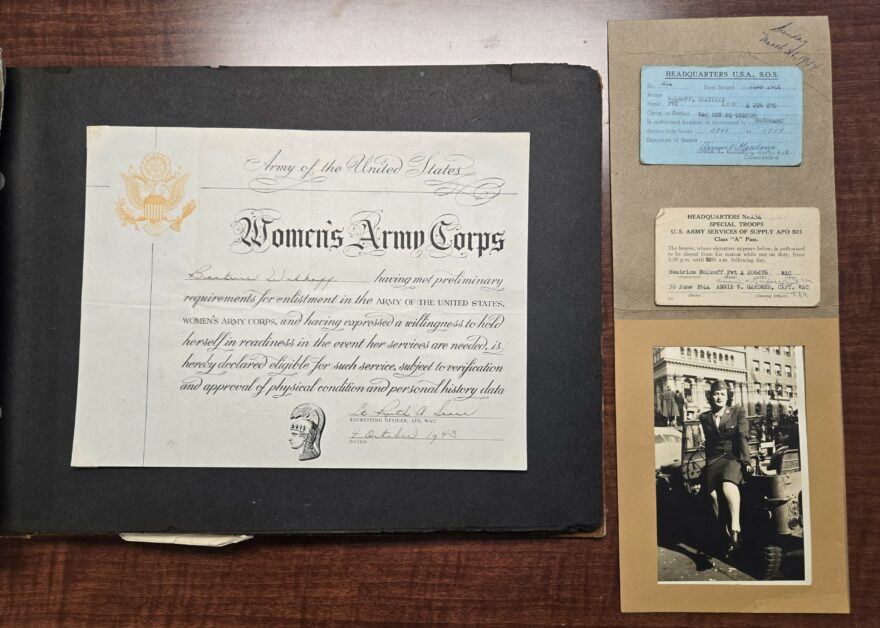
Beatrice Wolkoff Collection
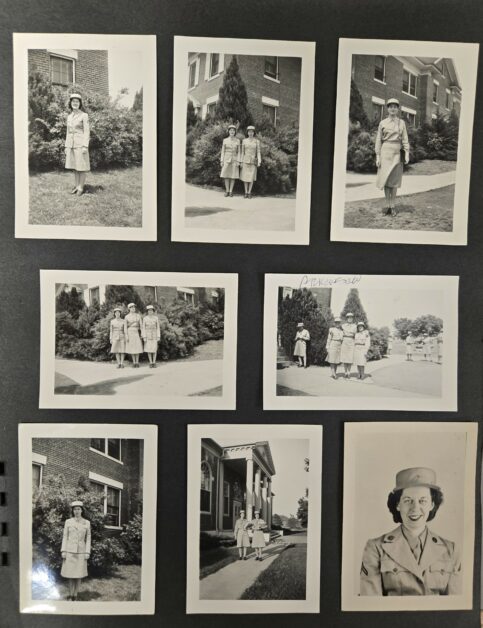
Beatrice Rosyln Wolkoff (1916-2001), of New York, New York, served in the U.S. Women’s Army Corps (WAC) during World War II. Wolkoff enlisted in the WAC on 4 October, 1943. She was stationed in Australia and Corregidor during her enlistment. The collection includes a scrapbook with photographs from Wolkoff’s time in the WAC. Most of the photographs were taken in Australia. There is also a certificate of her enlistment, a poem, and family photographs.
Harriette Haley Collection
Harriette Haley (1920-2016), of South Bristol, Maine, served in the U.S. Women’s Army Auxiliary Corps (WAAC) and the U.S. Women’s Army Corps (WAC) beginning in 1943. Haley enlisted in the WAAC in February 1943. She completed her basic training at Fort Oglethorpe, Georgia. In May 1943, she was assigned to the Photo and Reproduction Section at the Army Air Force Training Center at Boca Raton Field, Florida. The collection contains a photograph album documenting Haley’s basic training at Fort Oglethorpe, Georgia, and her assignment with the Photo and Reproduction Section at the Army Air Force Training Center at Boca Raton Field, Florida; official correspondence and military papers; newspaper clippings; dog tags; and a map of Boca Raton Field.
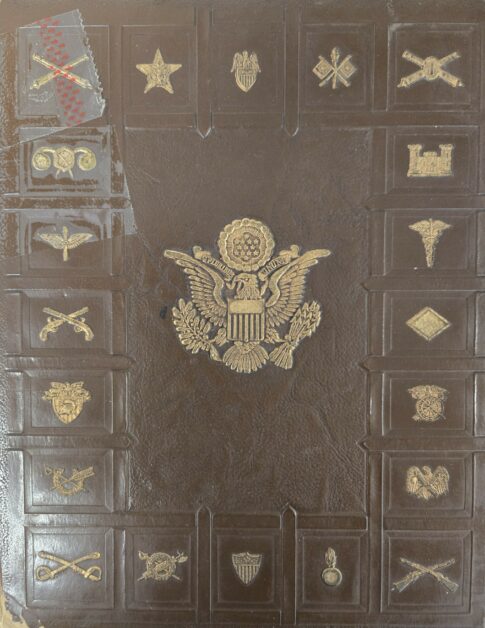
Antonio Tony Baker Photograph Albums
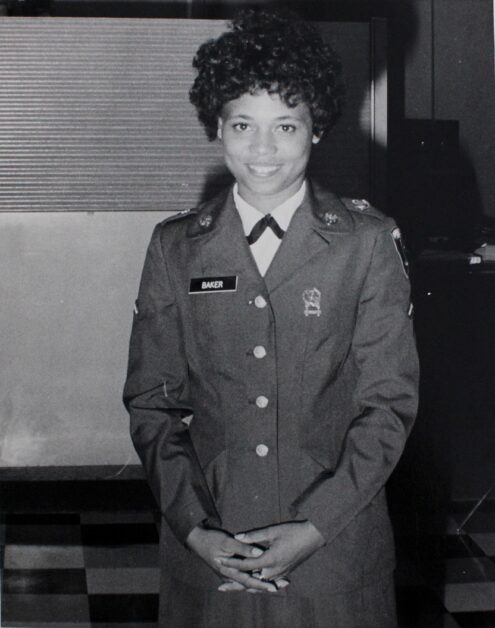
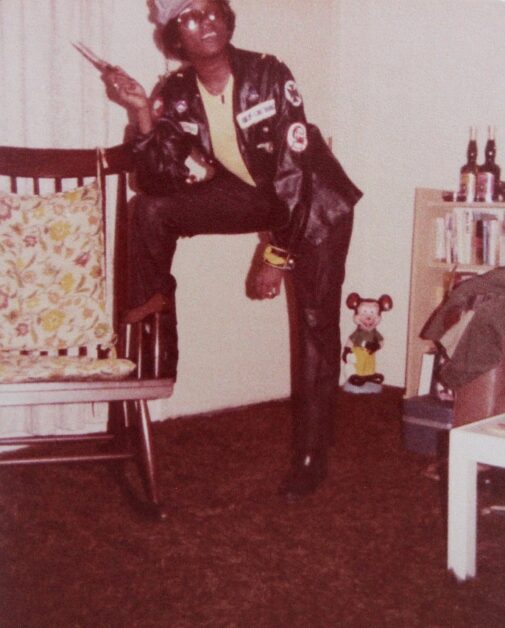
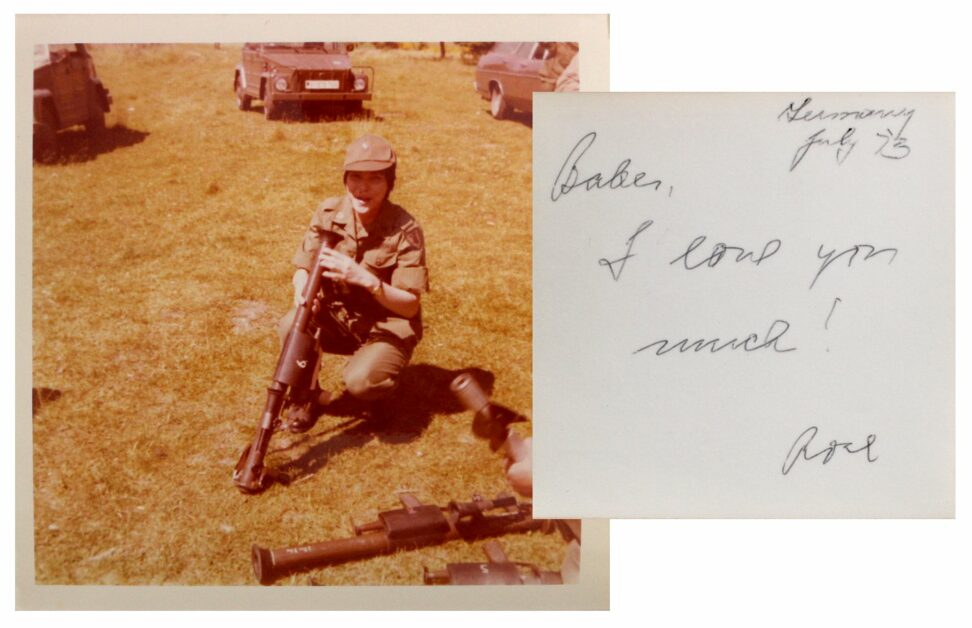
Antonio Tony Baker (1949-2025), of Norfolk, Virginia, served in the United States Army circa 1972-1974. The collection includes 3 photograph albums documenting Baker’s life in the U.S. Army and her social life, including captioned photographs from her girlfriend and fellow soldier, Rose.
Harriet “Tommy” Chapman Photograph Album
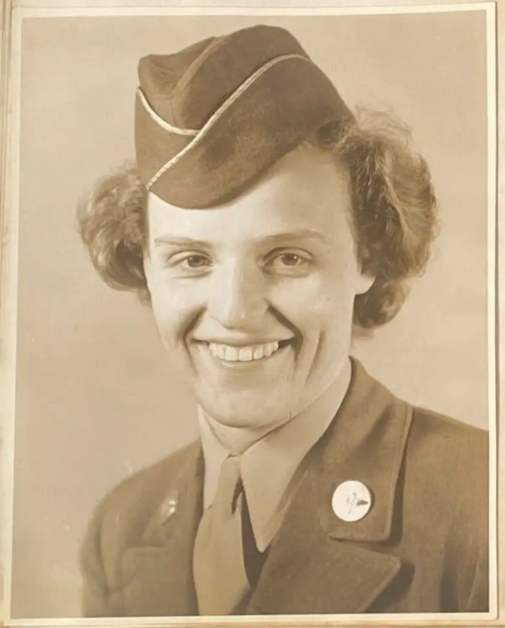
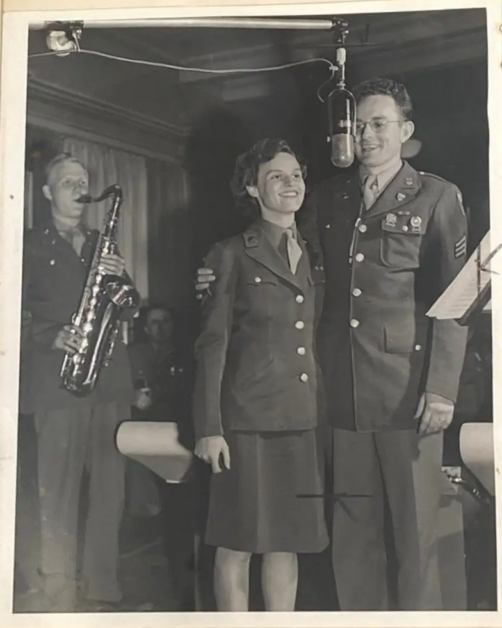
Harriet “Tommy” Chapman (1922-2018), of Middlesex, Connecticut, served as an entertainment specialist in the U.S. Women’s Army Corps (WAC) from 1944-1945 or 1946. She did her basic training at Fort Oglethorpe, Georgia, in February 1944. As an entertainment specialist, Chapman was a vocalist. She performed with Army bands on bases and on the radio in Rome, New York and Spokane, Washington. After she left the Army, Chapman moved to New York City and worked at B. Altman Department Store. She then opened businesses selling handcrafted Scandinavian merchandise. The collection includes photographs of WACs marching, eating, and playing baseball, as well as Chapman performing with Army Air Force dance bands. There are also clippings about her singing with Army swing bands on radio and television shows and in theaters.
Mytrice “Penny” Penelope McCaskill Photographs
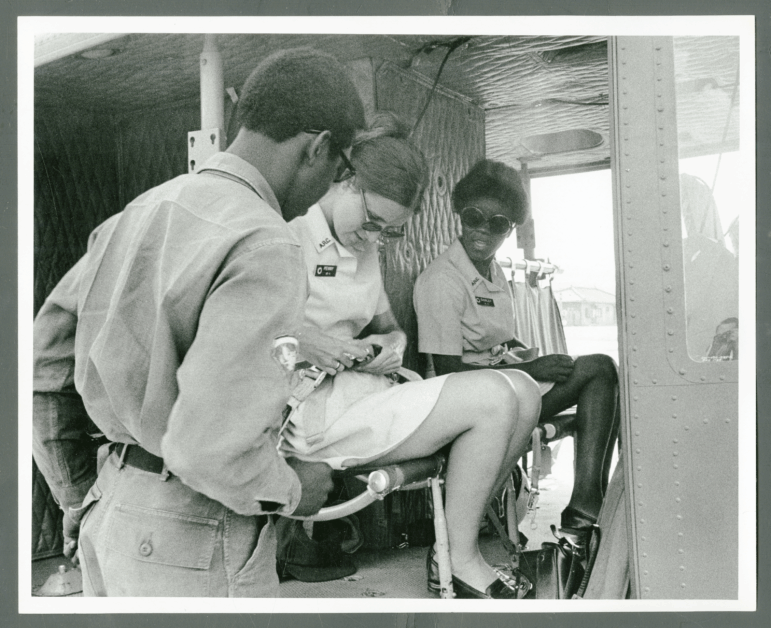
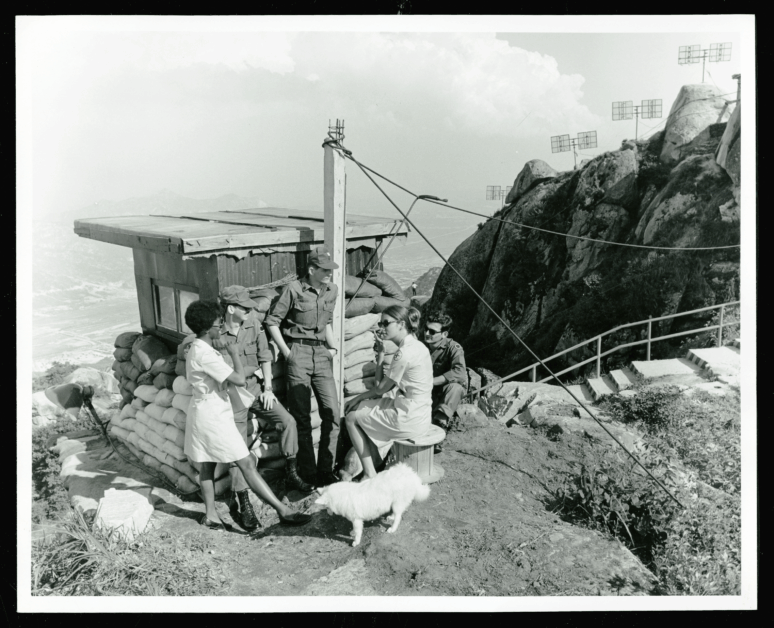
Mytrice “Penny” Penelope McCaskill (b. 1948), of Pinehurst, North Carolina, served with the American Red Cross Supplemental Recreational Activities (SRAO) from 1970-1971. McCaskill graduated from UNC Greensboro in 1969 and joined the American Red Cross Clubmobile Unit to provide recreational activities and support for U.S. soldiers during the Vietnam War. She was stationed at Fort Red Cloud, Fort Pelham, and Camp Pililaau in South Korea. The collection contains 16 official Red Cross photographs and a copy of a story from the UNCG Alumni News about McCaskill’s experience as an American Red Cross recreation aide in South Korea.
Lee Atwater Morgan Letters
Lee Atwater Morgan (1924-2023), of Concord, Massachusetts, served in the U.S. Women’s Army Corps (WAC) from 1944-1946. She did her basic training at Fort Oglethorpe, Georgia. She was trained as a weather observer and was stationed at Maxwell Field in Alabama, Laurinburg-Maxton Army Air Base in North Carolina, and Greenville Army Air Base in South Carolina. The collection includes approximately 100 letters written by Morgan to her parents from June 1944 to March 1946.

`
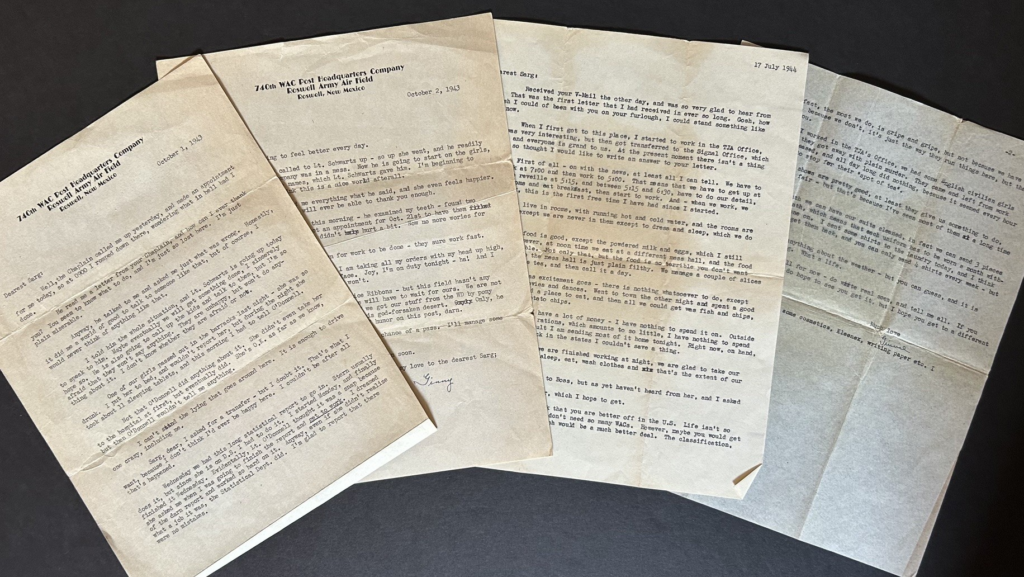
“Ginny” WAC letters
Ginny (last name unknown) was a WAC who served during World War II. In 1943, she was stationed at the 740th WAC Post Headquarters Company at Roswell Army Airfield in Roswell, New Mexico. In 1944, she was assigned to administrative duties in England. The collection consists of three letters written by “Ginny” to “Sarge” in 1943 and 1944. She referenced the low morale of the WACs at the Roswell Army Airfield in October 1943, and shared details about her assignment in England in July 1944.
University Archives
Men’s Soccer Trophies
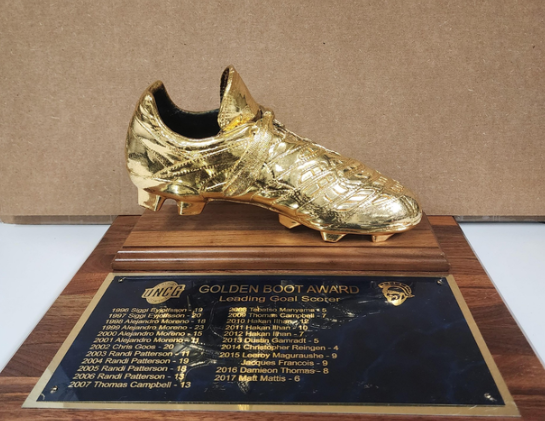
SCUA received 7 men’s soccer trophies from the UNCG Athletics Department, including this impressive Golden Boot Award, given to the year’s leading “goal shooter.” It is now a part of the UNCG Artifact Collection.
1896 Photograph of State Normal and Industrial School Students (now UNCG)
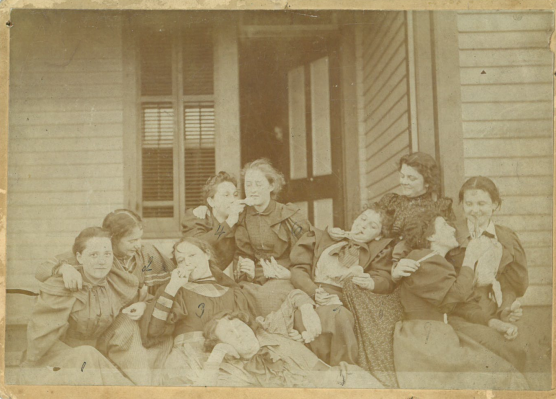
This photograph of State Normal students relaxing on an obliging campus porch, was donated by John F. Cannady, and it will now reside in the Historical Photograph Collection.